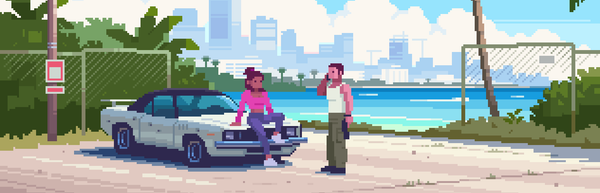
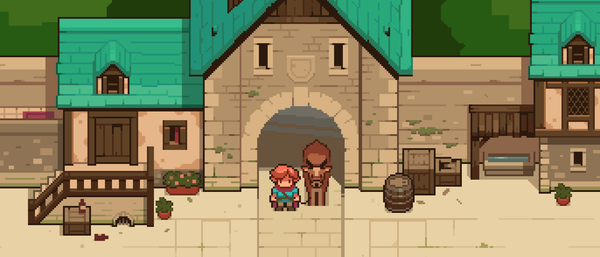
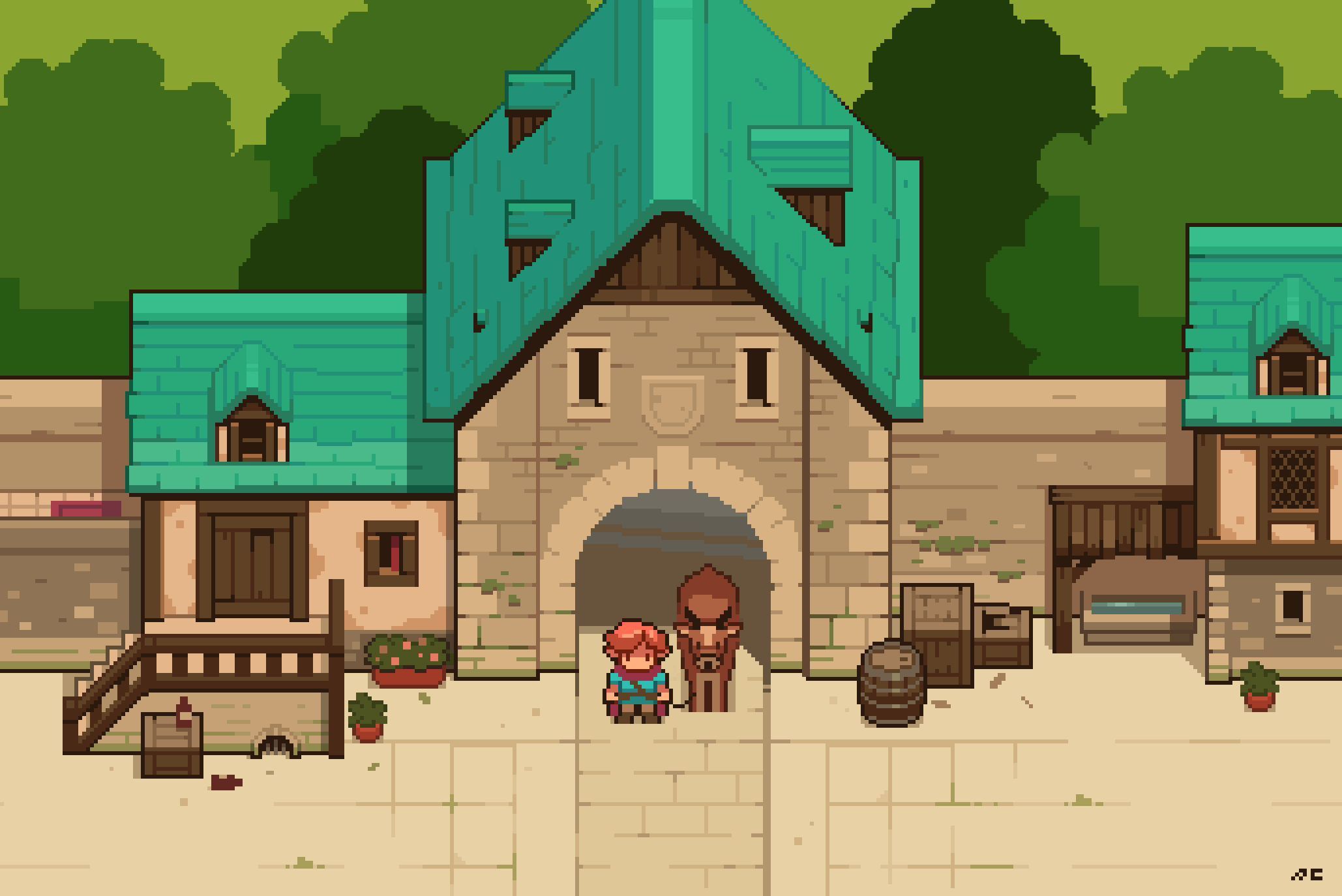
City Gate | Medieval Fantasy
In a world flooded with AI-generated art, hand-crafted world building has become my favorite creative escape. Join me as I build a medieval City Gate pixel by pixel for my top-down fantasy RPG — full timelapse and process included.
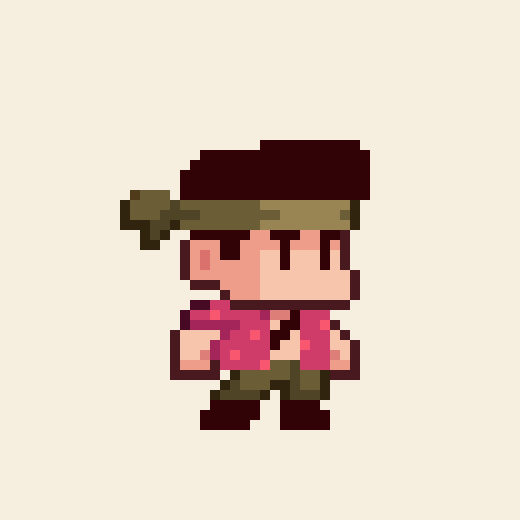
A deep medieval fantasy universe.
This is a personal world-building project I’ve been developing in parallel with my other creations. My ambition is to craft a deep medieval fantasy universe rendered in classic top-down 16x16 pixel art, with one clear priority guiding every decision: immersion.
The AI existential crisis that led me back to world-building.
In an era shaped by the rapid rise of AI-generated imagery, building a fully interactive world has taken on a deeper artistic significance for me. The technology’s ability to create impressive visuals quickly and efficiently has prompted me to reflect on my own creative goals. Realizing that AI could describe and visualize this world more effectively than I could initially stirred a profound existential crisis. This project has become my way of stepping beyond that tension — a return to pure game development, where I can shape a vast, coherent, and living universe that players can truly explore and inhabit.
Defining a realistic scope.
A major challenge in this process is finding the right balance between organic realism, a high level of detail, and the sheer quantity of assets that need to be created. Pushing too far in one direction can make the world feel impossible to complete. Striking this delicate equilibrium is an art in itself — one of the most fascinating aspects of game design.
Everything starts with a research phase.
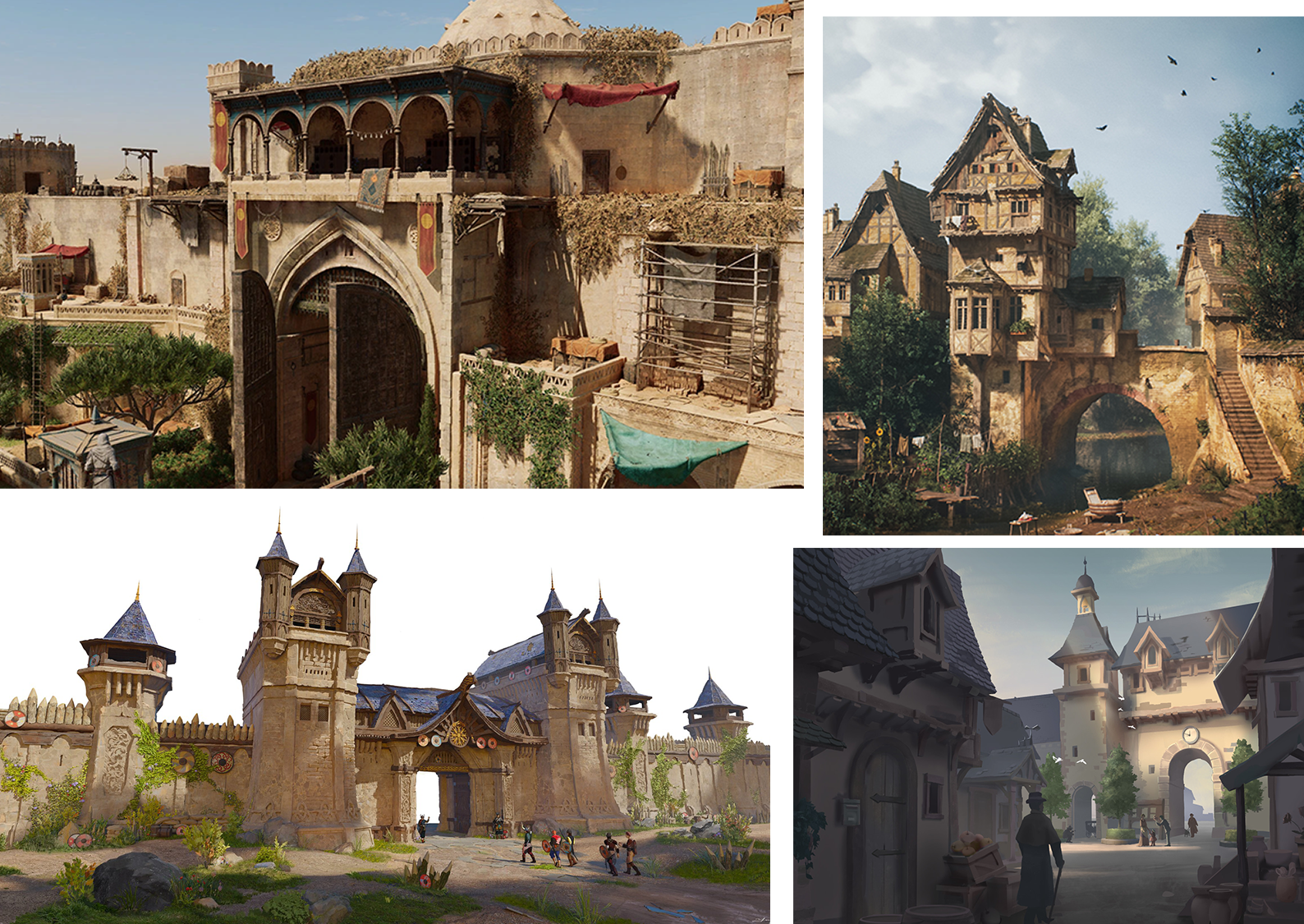
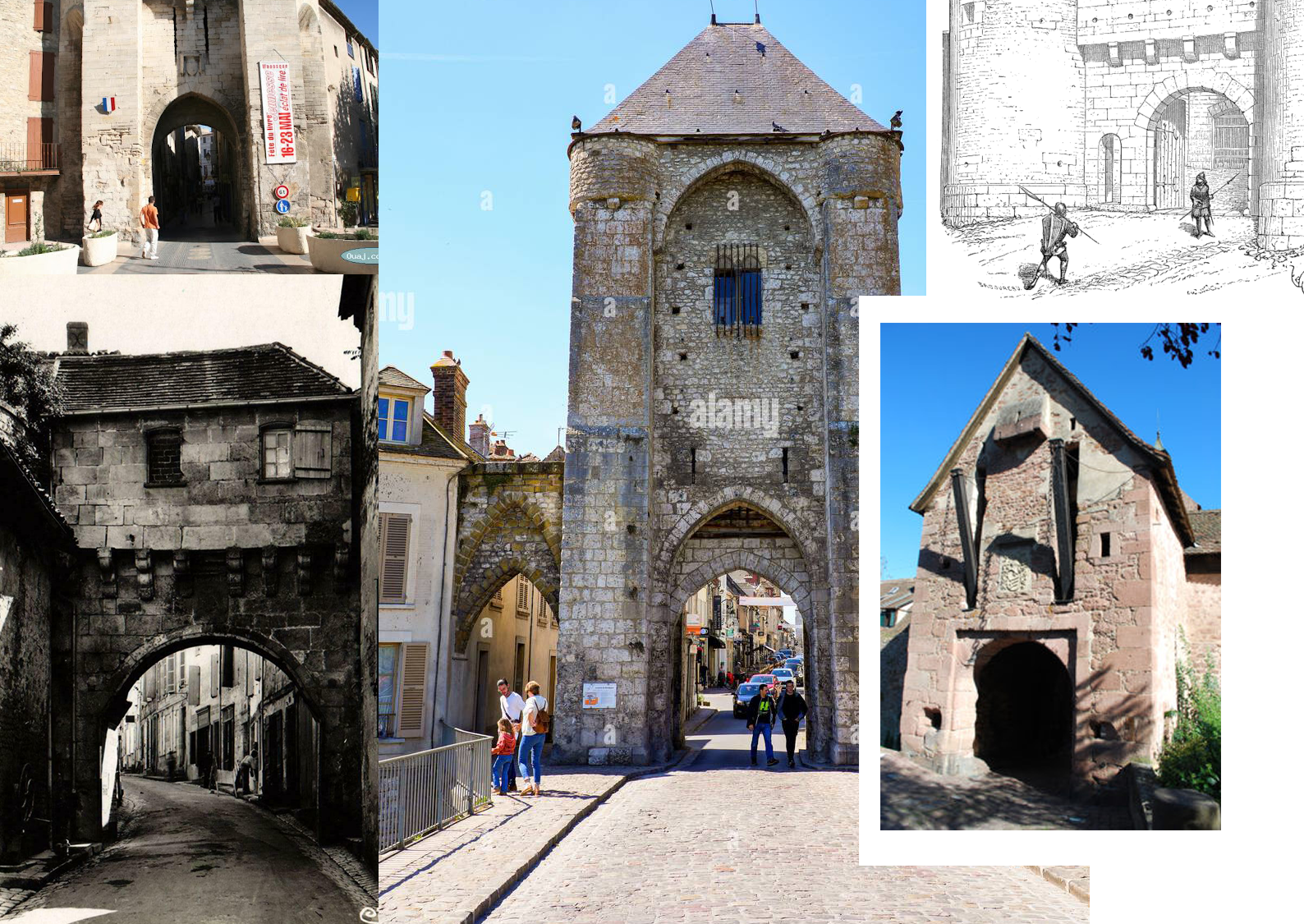
Long before placing the first tile or writing the first line of lore, I dedicate a great deal of time to research — gathering reference images, studying historical architecture, landscapes, clothing, objects, and collecting inspiring concept art. The objective is to obtain the broadest possible vision of this genre so that I can then distill all these influences into a cohesive, consistent, and convincing setting that players can truly believe in and lose themselves within.
« Shape vs Meaning »
Black and white thumbnails are a key early step. Working only with shapes and silhouettes lets me quickly test readability and composition. As Richard Williams stresses in The Animator’s Survival Kit, strong silhouettes are essential. The real challenge is finding the right balance between shape and meaning: the form must be visually appealing while clearly communicating what the object actually is.
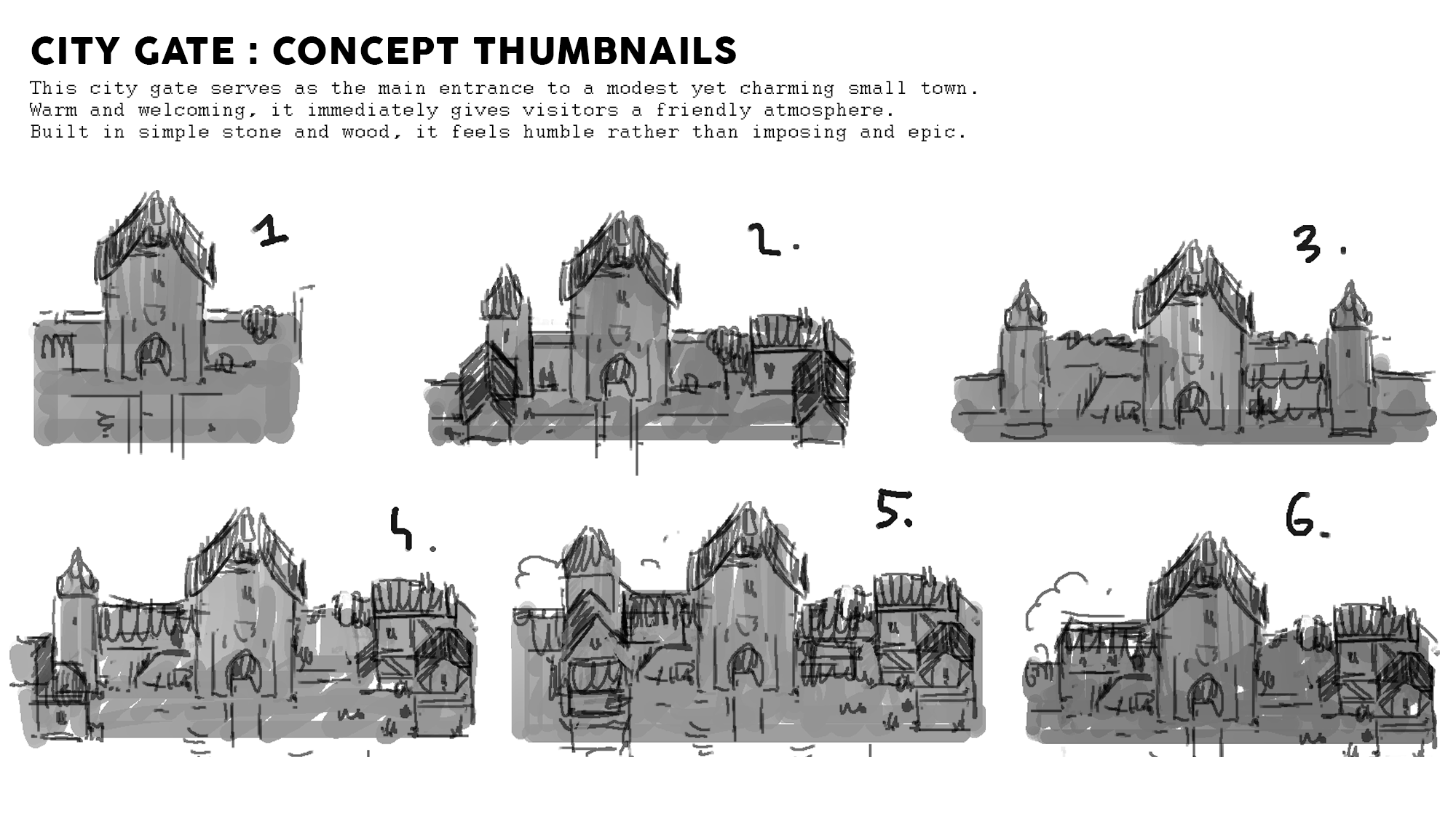
It’s regrettable that this fundamental practice — so essential in AAA game development — remains largely underexplored in the pixel art scene, which too often relies on simple cherry-picking of concepts or even outright poor concept art.
In my opinion, spending the necessary time crafting environments with intention makes a big difference. The richness and coherence you bring to your world can really help a project stand out and offer players a far more immersive and memorable experience.
Pixel Art Medieval Fantasy City Gate Mockup Timelapse
Written by